

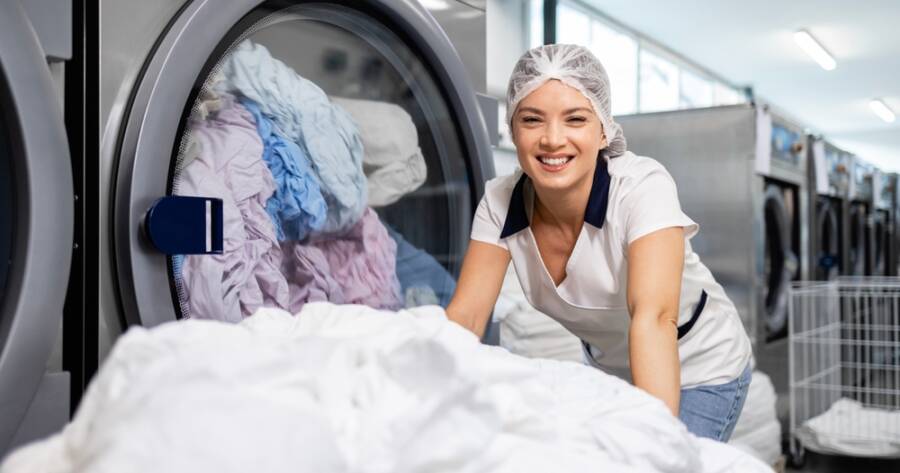
Hospital laundry services are pivotal in upholding the hygiene and safety standards within healthcare facilities. By employing specialized cleaning agents and techniques, professional laundry services prevent infection spread and ensure patient and staff safety. Understanding the essential components, challenges, and benefits of professional hospital laundry services helps to understand their critical role in healthcare management.
The Importance of Hospital Laundry Services
Hospital laundry services play a crucial role in maintaining the overall cleanliness and hygiene of healthcare facilities. Clean linens, gowns, and uniforms are essential in preventing the spread of infections and ensuring the safety of patients, staff, and visitors. Hospitals are high-traffic areas where germs and bacteria can easily spread, making cleanliness a fundamental aspect of patient care and overall well-being (source).
Key Components of Hospital Laundry Services
Effective hospital laundry services involve several key components. First, the selection of appropriate cleaning agents and techniques tailored to healthcare settings is vital. This includes using specialized detergents and disinfectants that are effective against a wide range of pathogens. Additionally, high-temperature washing and sterilization processes are often required to ensure the complete elimination of germs from linens and garments.
Another critical aspect is the proper handling and sorting of soiled linens to prevent cross-contamination. This involves categorizing laundry into different types, such as general, infectious, and hazardous, and following strict protocols for their collection, transportation, and processing. Proper waste disposal is also essential to maintain safety and hygiene standards (source).
Challenges in Hospital Laundry Services
Hospital laundry services face several challenges, including the need to comply with stringent health and safety regulations set by organizations like the CDC and OSHA. These regulations ensure that healthcare facilities receive high-quality cleaning services that meet regulatory requirements. Additionally, the high volume of laundry generated by hospitals requires efficient and effective processes to manage the workload without compromising on quality (source).
Another challenge is the need for ongoing training and certification programs for laundry staff. This ensures that they are equipped to handle specialized cleaning tasks unique to healthcare facilities and understand infection control protocols. Advanced cleaning technologies, such as HEPA filtration vacuums and ultraviolet light disinfection systems, are also utilized to achieve superior cleanliness.
Benefits of Professional Hospital Laundry Services
Engaging professional hospital laundry services offers numerous benefits. These services provide expert training, ensuring compliance with regulations and offering customized solutions tailored to each hospital’s needs. They focus on infection control by thoroughly cleaning and disinfecting high-touch surfaces, thereby maintaining a clean and healthy environment (source).
Professional services also ensure effective waste management by adhering to strict waste sorting and disposal regulations, ensuring the safety of hospital staff and the environment. Moreover, they offer a comprehensive range of services, including daily cleaning, deep cleaning, waste management, and specialty services like biohazard cleanup. Customization and flexibility in services are important to meet the unique needs of each hospital (source).
Why You Should Learn More About Hospital Laundry Services Today
Understanding the intricacies of hospital laundry services is essential for anyone involved in healthcare management or facility operations. These services are a critical component of infection control and patient safety, directly impacting the quality of care provided in hospitals.
By learning more about the processes, challenges, and benefits of professional hospital laundry services, healthcare facilities can ensure they are equipped to maintain the highest standards of cleanliness and hygiene. This knowledge is vital for making informed decisions about service providers and implementing effective cleaning protocols that protect patients, staff, and visitors.